Quick Answer
- British buyers are the second-largest group of Dubai property investors in 2026 at 13.3%.
- Dubai property investment delivers gross rental yields of 6 to 9% annually with zero UAE tax.
- UK investors can buy Dubai property from GBP 125,000 in established freehold zones.
- The Dubai property market recorded AED 291.7 billion in transactions in H1 2026 alone.
- Investing AED 2 million or more in Dubai property qualifies UK buyers for the 10-year Golden Visa.
Dubai property investment in 2026 is no longer a niche strategy for a handful of adventurous UK landlords. British buyers now hold second place among all international investors in Dubai’s real estate market, accounting for 13.3% of total purchasing activity in early 2026, according to Harbor Real Estate citing DXBinteract data. That number reflects a fundamental shift in how UK investors are responding to a domestic buy-to-let market hollowed out by HMRC restrictions, rising mortgage costs, and stagnating net returns. Dubai is not a speculative bet for most of these buyers. It is a structured allocation to a market that delivers what British property no longer can.
The challenge for UK investors who are ready to act is finding reliable, structured information in one place. Most online content either oversells Dubai with vague yield figures and no mention of UK tax obligations, or dismisses it with generic risk warnings that ignore the regulatory framework the Dubai Land Department has built. Neither extreme helps a UK investor make a sound decision.
This guide covers the complete picture of Dubai property investment for UK buyers in 2026: why the numbers work, how to choose the right zone, what the step-by-step buying process looks like from Britain, how the UK tax position is managed, and how to connect with verified developers before committing any capital.
Why UK Investors Choose Dubai
The core case for Dubai property investment comes down to a structural comparison with domestic alternatives. UK buy-to-let has become progressively less viable for higher-rate taxpayers since 2016, and the gap between Dubai and London returns has never been wider.
Dubai vs UK Returns
On a GBP 500,000 investment, a UK-resident Dubai investor nets approximately GBP 10,700 per year after costs and UK tax, versus GBP 3,400 for a London landlord in Zone 2. That difference compounds significantly over a five to ten year hold period.
Dubai gross yields of 5.5 to 9% compare against 3 to 4.5% across UK buy-to-let markets, and the UAE charges zero income tax, zero capital gains tax, and zero annual property tax on the Dubai side of the equation. Even after HMRC’s requirement to declare overseas rental income on Self Assessment, Dubai property investment consistently produces stronger net returns than equivalent UK assets for higher-rate taxpayers.
Zero UAE Tax Structure
Dubai’s tax framework is the most powerful structural advantage Dubai property investment offers UK buyers. The UAE charges no income tax on rental earnings, no capital gains tax when you sell, and no annual property tax. The zero tax framework means zero percent income tax on rental income, zero percent capital gains tax, no annual property tax, and 100% freehold ownership in designated zones.
For a UK higher-rate taxpayer paying 40% on domestic rental profits and facing 24% CGT on investment property gains, the difference in net return from an equivalent Dubai property is material at every stage of the investment lifecycle.
Population and Rental Demand
Dubai’s population surpassed 4 million in 2025, with conservative estimates suggesting a further 175,000 to 225,000 residents being added in 2026. This expanding population base, driven by international professionals, entrepreneurs, and families attracted by the UAE’s zero personal income tax environment, creates consistent year-round rental demand across every price segment.
Foreign investors now account for over 40% of residential ownership in Dubai, a remarkable indicator of global confidence in the market, with rental yields maintaining a meaningful gap over London and major European cities at 5 to 9% annually. High occupancy rates, landlord-favourable tenancy law, and a growing corporate tenant base make Dubai property investment significantly less dependent on finding tenants than comparable UK markets where rental demand is concentrated in specific zones.
Top Investment Zones in Dubai
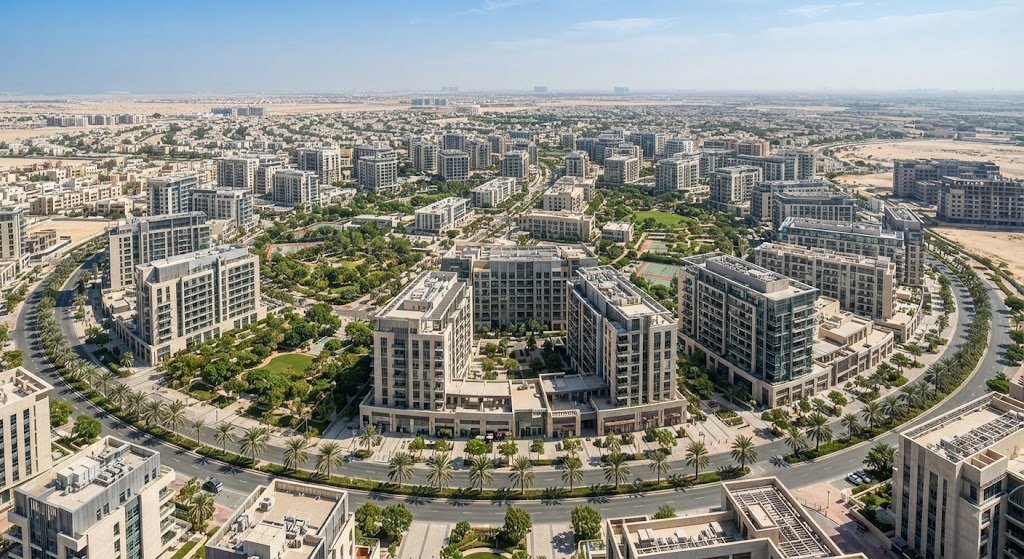
Choosing the right zone is the most consequential decision in any Dubai property investment. Location determines yield, tenant profile, capital growth potential, service charge burden, and Golden Visa eligibility. The zones below represent the strongest options for UK buyers in 2026.
High-Yield Mid-Market Zones
Jumeirah Village Circle and Business Bay are the two most recommended zones for income-focused UK investors entering Dubai property investment in 2026. JVC consistently delivers gross yields of 7 to 9%, with entry-level one-bedroom apartments available from approximately AED 650,000 (GBP 135,000). Service charges of AED 12 to 18 per square foot keep net yields strong relative to premium zones.
| Zone | Gross Yield | Entry Price (GBP approx.) | Tenant Profile | Capital Growth |
| Jumeirah Village Circle | 7–9% | From GBP 135,000 | Young professionals, families | Moderate |
| Business Bay | 5.5–7% | From GBP 175,000 | Corporate, DIFC professionals | Strong |
| Dubai Marina | 7–8.5% | From GBP 200,000 | Expats, lifestyle renters | Strong |
| Downtown Dubai | 6–7% | From GBP 280,000 | Premium, corporate | Very strong |
| Dubai Hills Estate | 5.5–7% | From GBP 300,000 | Families, long-term tenants | Strong |
| Palm Jumeirah | 5–7% | From GBP 420,000 | Ultra-premium, short-term | Premium |
Business Bay delivers 5.5 to 7% yield with above-average capital growth, a corporate tenant base drawn from the nearby DIFC financial district, and strong resale liquidity. Both zones have significant off-plan pipelines from established developers including Binghatti, Ellington, and Imtiaz, with interest-free payment plans from 10% deposits.
Premium Capital Growth Zones
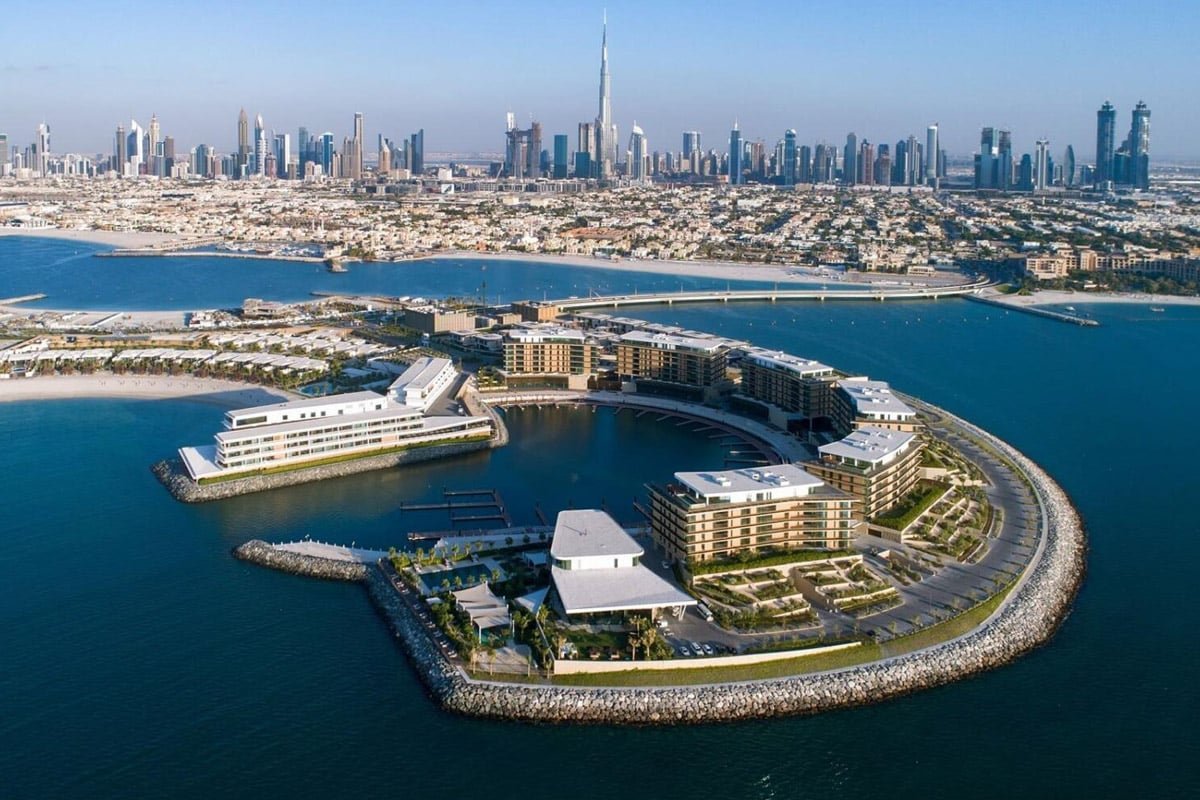
Downtown Dubai and Palm Jumeirah deliver lower gross yields than mid-market zones but substantially stronger capital appreciation and resale liquidity. Properties in Downtown Dubai surround the Burj Khalifa and Dubai Mall, creating permanent anchor demand from tourists, corporate tenants, and high-net-worth residents. Palm Jumeirah villa values have grown significantly over the five-year period to 2026, driven by ultra-premium demand from global high-net-worth buyers and a constrained supply of freehold villa stock. For UK investors whose primary goal is capital appreciation alongside a Dubai lifestyle base, these premium zones deliver the strongest five to ten year total return profiles, albeit with lower running yields.
Premium zone Dubai property investment suits UK buyers with longer hold horizons, larger capital allocations, and interest in the UAE Golden Visa at the AED 2 million threshold.
Emerging High-Growth Areas
Dubai South, Al Furjan, and Arjan represent the fastest-growing yield zones in 2026, with gross yields in some developments exceeding 9 to 11% and off-plan entry prices well below established communities. These areas carry higher vacancy risk than proven mid-market zones and require more rigorous developer selection.
However, for UK investors willing to identify the right project from an established developer, the combination of low entry price, high headline yield, and significant infrastructure investment from the UAE government creates a compelling long-term case. From years of advising UK investors on Dubai property investment, we have consistently observed that buyers who research developer track records before purchasing in emerging areas outperform those who select purely on advertised yield figures.
How to Invest from the UK
Dubai property investment is fully accessible to UK buyers without UAE residency, a UAE bank account, or travel to Dubai. The process is legally transparent and well-supported by licensed professionals at every stage.
Understanding Freehold Ownership
British citizens have full freehold ownership rights in Dubai’s designated freehold zones, established under UAE Federal Law No. 7 of 2006. Freehold ownership provides permanent, heritable title to the property and the land it stands on. Properties can be sold, let, renovated, or bequeathed without restriction.
All title deeds are registered with and issued by the Dubai Land Department, providing legal certainty equivalent to UK Land Registry ownership. The DLD also maintains the RERA register of licensed agents and developers, the starting point for verifying any property or professional before committing funds.
Off-Plan vs Ready Property
The choice between off-plan and ready property is the first strategic decision in any Dubai property investment. Off-plan properties offer lower entry prices, interest-free staged payment plans from 10 to 20% deposits, and pre-handover capital appreciation.
| Factor | Off-Plan | Ready Property |
| Entry price | 15–25% below ready | Market rate |
| Payment | Staged over construction | Full at transfer |
| Rental income | Post-handover only | Immediate |
| Construction risk | Present (mitigated by RERA escrow) | None |
| Capital gain | Pre-handover appreciation | Based on current value |
| Best for | Growth-focused UK buyers | Income-focused UK buyers |
Ready properties deliver immediate rental income, no construction risk, and a known rental history. Most UK investors entering Dubai property investment for the first time begin with an off-plan property from an established developer to maximise capital efficiency, then add a ready property to their portfolio once the off-plan unit reaches handover and begins generating income.
Step-by-Step Buying Process
The full process for UK-based Dubai property investment from reservation to title deed typically completes in 30 to 60 days for ready properties and runs to handover for off-plan:
- Step 1: Define investment goal, budget, and target zone based on yield or growth priority
- Step 2: Select a RERA-registered agent or attend the Dubai Property Expo UK to meet verified developers directly
- Step 3: Reserve the property with a 10% deposit and sign the Memorandum of Understanding (MOU)
- Step 4: Appoint a Power of Attorney representative to sign documents on your behalf from the UK
- Step 5: Pay the 4% Dubai Land Department transfer fee and 2% agent commission
- Step 6: Receive your Title Deed from the DLD confirming legal ownership
- Step 7: Appoint a licensed property management company to handle letting, Ejari registration, and tenant management
Following these steps creates a clear path from property selection to legal ownership and ongoing management. Planning each stage in advance helps UK investors complete the purchase smoothly and manage the property remotely.
UK Tax on Dubai Investment
Managing the UK tax position is the most important administrative responsibility for UK investors entering Dubai property investment. The rules are clear, manageable, and well-supported by professional advisors.
Income Tax and Self Assessment
UK tax residents must declare all Dubai rental income on their Self Assessment tax return each year in the foreign income section. The UAE-UK Double Taxation Agreement prevents the same income from being taxed twice. Since the UAE charges zero rental income tax, the DTA primarily establishes the reporting framework.
UK investors declare gross rental income and deduct allowable expenses before calculating the taxable amount. Allowable deductions include property management fees of 8 to 10% of annual rent, maintenance and repairs, insurance, and mortgage interest at the 20% tax credit rate for individual landlords. The resulting net income is taxed at your UK marginal rate of 20%, 40%, or 45%.
Capital Gains and Inheritance Tax
When you sell a Dubai property, the UAE charges zero capital gains tax. HMRC treats the gain as a foreign capital gain subject to UK CGT at 18% for basic-rate taxpayers and 24% for higher-rate taxpayers, with a GBP 3,000 annual exemption. Married couples who hold Dubai property jointly can use both annual exemptions and potentially benefit from a lower income tax band on disposal. Since April 2025, HMRC’s inheritance tax rules apply on a residency basis:
| UK Tax | Rate | UAE Equivalent | Notes |
| Income tax on rental income | 20–45% | Zero | Declare on Self Assessment; DTA prevents double tax |
| Capital gains tax on sale | 18–24% | Zero | GBP 3,000 annual exemption applies |
| Inheritance tax | 40% above threshold | Zero | Worldwide estate if UK resident 10/20 years |
| Stamp duty (purchase) | Zero | 4% DLD fee | No UK SDLT on overseas property purchase |
if you have been UK-resident for 10 of the last 20 tax years, your worldwide assets including Dubai property fall within the 40% IHT scope above the GBP 325,000 nil-rate band. Early IHT planning through spousal ownership, trust structures, or lifetime gifting is worth considering before purchase rather than after.
Ready to Start Your Dubai Investment?
Dubai property investment in 2026 offers UK buyers a combination of verified rental yields, zero UAE taxation, full foreign freehold ownership, a transparent legal framework, and a Golden Visa pathway that no domestic property market can match.
British investors are already the second-largest buyer group in Dubai, and the structural advantages that attracted early movers are fully intact for those entering now.
Register for the Dubai Property Expo UK at dubaipropertiesexpo.co.uk to meet 100+ RERA-verified developers, compare live projects across every zone, and take your first step into Dubai property investment with expert guidance at your side.

Frequently Asked Questions
Is Dubai property investment worth it for UK buyers in 2026?
Yes, based on current market fundamentals. British buyers account for 13.3% of all international property purchases in Dubai in early 2026, making them the second-largest investor group globally. Dubai gross rental yields of 6 to 9% consistently outperform UK buy-to-let markets, and the UAE charges zero income tax, zero capital gains tax, and zero annual property tax. UK higher-rate taxpayers who structure their Dubai property investment correctly net significantly more income annually than from equivalent UK assets. The Dubai Land Department provides full legal protection through RERA regulation, mandatory escrow accounts for off-plan buyers, and transparent title deed registration.
How much money do I need to invest in Dubai property from the UK?
UK investors can enter Dubai’s established freehold zones from approximately GBP 125,000 to GBP 135,000 in high-yield communities such as Jumeirah Village Circle and Al Furjan, subject to developer confirmation. Off-plan payment plans from 10 to 20% deposits allow UK buyers to start their Dubai property investment with a fraction of the total property value upfront, spreading payments across the construction period. Premium zones such as Dubai Marina and Downtown Dubai require from GBP 200,000 to GBP 280,000 for quality one-bedroom apartments. For UAE Golden Visa eligibility, a minimum investment of AED 2 million, approximately GBP 420,000, applies.
What rental yield can UK investors realistically expect from Dubai property?
As of mid-2026, gross rental yields for new contracts in Dubai average 6.98% according to market data. High-performing mid-market zones including Jumeirah Village Circle and Al Furjan deliver 7 to 9% gross yields. Business Bay and Dubai Marina consistently return 5.5 to 8.5% gross. Net yields after management fees, service charges, and maintenance typically run 1.5 to 2 percentage points below gross. For UK higher-rate taxpayers, the Dubai property investment net yield position after allowable HMRC deductions still significantly outperforms equivalent London buy-to-let net returns, which typically collapse below 2% after tax for 40% taxpayers.
Do I pay UK tax on Dubai property investment income?
Yes. UK tax residents must declare all Dubai rental income on their Self Assessment tax return each year, even though the UAE charges zero tax on that income. The UK-UAE Double Taxation Agreement prevents double taxation. You declare gross rental income, deduct allowable expenses, and pay UK income tax at your marginal rate on the net amount. Capital gains on the sale of a Dubai property may also attract UK CGT at 18 to 24%. Always take professional UK tax advice before structuring your Dubai property investment, as the ownership vehicle, property type, and disposal timing all affect your final tax position.
Can I manage my Dubai property investment from the UK?
Yes. UK-based investors manage Dubai property investment entirely remotely through licensed property management companies. The management company handles tenant sourcing and vetting, Ejari registration, rent collection, DEWA setup, maintenance coordination, and RERA compliance. Management fees run 8 to 10% of annual rental income for long-term lets and 20 to 25% for short-term holiday home management. These fees are deductible against your UK Self Assessment income declaration. The AED is pegged to the USD, so net rental income is transferred to your UK bank account monthly or quarterly, with GBP returns fluctuating with the GBP to USD exchange rate