Quick Answer:
- Dubai reached AED 252 billion in Q1 transactions
- Foreign investors contributed AED 148.35 billion in 2026
- Dubai yields range between 6 and 10%
- Zero UAE tax applies to rental income
- Dubai transactions increased 31% year-on-year in 2026
The Dubai property market is growing faster than any comparable global city in 2026. Transaction volumes are breaking records. Foreign investor participation is accelerating. And UK buyers are entering the market in higher numbers than at any previous point.
Understanding where the market stands right now, which areas are delivering, and what risks exist gives UK investors the foundation to make confident decisions.
This guide covers all of it with live data and honest analysis.
What Is Happening in the Dubai Property Market
The Dubai property market entered 2026 with the strongest fundamentals in its recorded history. Transaction volumes, price growth, and foreign investor demand are all tracking upward simultaneously.
According to the Dubai Land Department, Q1 2026 alone recorded AED 252 billion in real estate transactions, a 31% year-on-year increase. Foreign investors contributed AED 148.35 billion of that total, up 26% on the same period in 2025.
Q1 2026 Transaction Snapshot
| Metric | Q1 2026 | Change YoY |
| Total transaction value | AED 252 billion | +31% |
| Foreign investor contribution | AED 148.35 billion | +26% |
| Dubai population | Approaching 4 million | Growing |
| New residents per month | 17,000+ | Sustained |
These figures highlight why the Dubai property market continues to attract strong international investor demand from buyers across the UK and global markets.
Price Growth Across Key Areas
According to Knight Frank’s Dubai Market Review, prime Dubai residential values rose by over 16% in 2024. That momentum has carried into 2026 across established freehold zones.
Property Monitor’s monthly market reports track DLD transaction data in real time and confirm continued upward price movement in Business Bay, Dubai Marina, and Downtown Dubai throughout Q1 2026.
Cavendish Maxwell’s Dubai property research identifies supply constraints in prime zones as a key driver of sustained price growth. New supply in Downtown Dubai and Palm Jumeirah remains limited by geography and planning restrictions.
Dubai Property Market vs UK Property Market
The comparison between the Dubai property market and the UK buy-to-let has never been clearer in Dubai’s favour. UK investors running both sets of numbers are choosing Dubai at a rate that reflects that analysis.
| Factor | UK Property | Dubai Property Market |
| Average gross rental yield | 4 to 6% | 6 to 10% |
| Income tax on rental income | Yes, at the marginal rate | 0% |
| Capital gains tax on disposal | 18 to 24% | 0% |
| Annual property tax | Council tax equivalent | None |
| Stamp duty on additional property | 5% surcharge | 4% DLD fee (one-time) |
| Foreign ownership rights | Unrestricted | 100% freehold in designated zones |
| Golden Visa eligibility | No | Yes, from AED 750,000 |
UK yield data: Zoopla Rental Market Report. UK CGT rates: gov.uk/capital-gains-tax/rates
From years of advising UK investors comparing both markets, the inflexion point is always the same. When a British landlord calculates net yield after Section 24 restrictions, stamp duty surcharges, and income tax, Dubai’s zero-tax rental income changes the entire equation.
Which Areas Are Performing Best
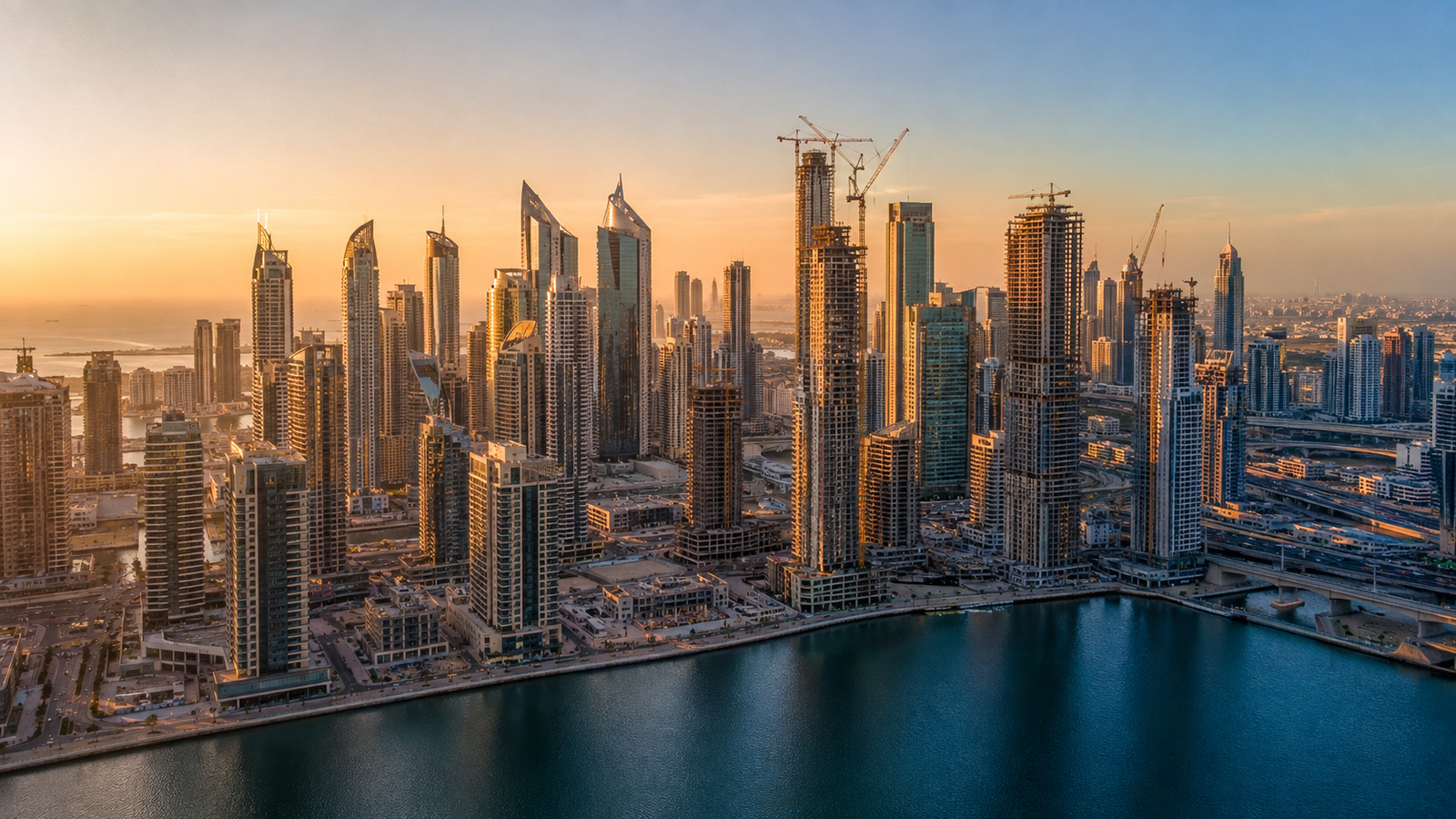
Not every area in the Dubai property market delivers equal results. Location selection is the single biggest driver of investment performance. Here is where UK investors are focusing their capital in 2026.
| Area | Avg Entry (AED) | Gross Yield | Best For |
| Jumeirah Village Circle | 685,000 | 6 to 8% | Yield-focused entry |
| Business Bay | 2,148,771 | 7.07% | Corporate tenants |
| DAMAC Hills 2 | 735,886 | 7.69% | Affordable high yield |
| Dubai Marina | 2,649,124 | 6.62% | Lifestyle + STR |
| Downtown Dubai | 3,570,373 | 6.01% | Capital growth |
| Dubai Hills Estate | From 1,200,000 | 6.72% | Families + growth |
| Dubai South | 596,810 | 6.8%+ | Long-term growth |
| Dubai Creek Harbour | From 1,400,000 | 6.5% | Future capital play |
These communities continue leading the Dubai property market because they combine strong rental demand, infrastructure growth, and investment opportunities across every budget level.
Data:Property Monitor Q1 2026and Dubai Land Department
Yield vs Capital Growth: Which Strategy Fits You?
These are two different strategies. Know which one you are playing before you buy.
Yield investors target income from day one. JVC, Business Bay, and DAMAC Hills 2 consistently deliver in this category. According to FAM Properties’ Dubai market analysis, JVC recorded 18,782 transactions in 2025, making it Dubai’s most liquid community.
Growth investors accept a lower initial yield in exchange for long-term appreciation. Downtown Dubai, Dubai Creek Harbour, and Dubai South sit in this category. Sands of Wealth’s 2026 analysis identifies 15 to 29% annual appreciation in corridors surrounding Dubai South and Dubai Creek Harbour.
Most UK investors entering the Dubai property market between AED 800,000 and AED 2,000,000 should prioritise yield first. Capital appreciation at that entry level is a bonus, not the primary strategy.
What Is Driving Dubai Property Market Growth?
Three structural forces are driving the Dubai property market’s sustained performance. Each one matters for UK investors assessing long-term demand.
Population Growth
Dubai’s population is approaching 4 million residents and growing at over 17,000 new arrivals per month. That growth is driven by business migration, expatriate workforce expansion, and residency visa reforms, including the Golden Visa programme. Every new resident is a potential tenant.
Infrastructure Investment
The Dubai Urban Master Plan 2040 commits the government to a 134% increase in tourism and hospitality land area, new metro extensions, and the Al Maktoum Airport expansion to accommodate 260 million passengers annually. Infrastructure investment at this scale sustains long-term property demand.
Foreign Investor Demand
British nationals rank consistently among the top five buyer nationalities in the Dubai property market. Indian, Russian, Chinese, and European investors are also active at scale. That breadth of demand creates genuine market liquidity and exit optionality for UK investors.
Additionally, the DAMAC Properties developer insight report confirms that off-plan demand from international buyers accelerated in Q1 2026, particularly in the AED 1,000,000 to AED 3,000,000 range.
What Are the Risks in the Dubai Property Market?
What we have consistently observed with UK investors is that those who understand the risks enter more confidently and perform better. The Dubai property market carries real risks that deserve honest assessment.
The primary risk is developer selection. Not every developer in the Dubai property market has an equivalent completion track record. Always verify RERA registration through the Dubai Land Department portal before signing. For a full breakdown of what to watch for, read our guide on the risks of buying property in Dubai.
Location risk is the second concern. Oversupplied areas with weak rental demand can deliver yields well below market averages. Always validate transaction volumes, not just developer projections, before committing to a specific area.
HMRC obligations are the third consideration for UK buyers. Dubai rental income must be declared on your Self Assessment return annually. Full guidance is at gov.uk/tax-foreign-income. The Dubai property market offers zero tax at source, but UK residency obligations remain regardless.
Ready to Invest in the Dubai Property Market?
The Dubai property market in 2026 is delivering record transaction volumes, sustained price growth, and rental yields that UK investors simply cannot match domestically. The structural case for entering now is backed by live DLD data, population growth, and infrastructure investment locked in through the Dubai D33 Economic Agenda.
The Dubai Property Expo connects UK investors directly with verified developers across every area in this guide. Events are held in London, Manchester, Birmingham, and Liverpool. Properties start from £125,000 with flexible, interest-free payment plans available.
Register your free place now at dubaipropertiesexpo.co.uk and speak with an advisor who works exclusively with British investors.
Frequently Asked Questions
What is the state of the Dubai property market in 2026?
The Dubai property market is performing at record levels in 2026, with AED 252 billion in Q1 transactions alone and strong foreign investor participation. Population growth, infrastructure expansion, and rising global demand continue supporting both rental prices and long-term property appreciation.
Is the Dubai property market safe for UK investors?
Yes. The Dubai property market is regulated by the Dubai Land Department and RERA, which provide strong protections through escrow accounts, title deed registration, and legal dispute processes. UK investors reduce most risks by purchasing only through verified RERA-registered developers.
What rental yields does the Dubai property market deliver?
Dubai property investment typically delivers gross rental yields between 6 and 10%, depending on the area and property type. Communities like JVC, Business Bay, and Dubai Marina continue to outperform many UK buy-to-let markets in both rental return and long-term growth potential.
Can UK investors buy freehold property in Dubai?
Yes. UK nationals can fully own freehold property across designated Dubai communities, including Dubai Marina, Downtown Dubai, Business Bay, and Palm Jumeirah. Ownership rights include selling, leasing, transferring, and qualifying for the UAE Golden Visa residency programs.
How do UK investors get started in the Dubai property market?
Most UK investors begin by defining their investment goals, setting a budget, researching Dubai communities, and attending Dubai property expos in cities like London or Manchester. The buying process is straightforward and supported through regulated developers, advisors, and DLD registration systems.