Quick Answer:
-
Dubai villa and townhouse gross rental yields range from 4% to 7% in 2026.
-
Arabian Ranches villas average AED 359,779 annually, according to DLD transaction data.
-
UK investors can manage a house to let in Dubai entirely remotely from Britain.
-
Dubai villas are projected to appreciate close to 18% in capital value through 2026.
-
There is zero UAE income tax on rental income from a house to let in Dubai.
A house to let in Dubai in 2026 offers UK investors something the domestic market cannot: a freehold villa or townhouse in a gated, amenity-rich community generating consistent rental income in a zero-tax environment, managed entirely from Britain. With a vacancy rate sitting at a historic low of 4 to 7%, net income from Dubai villas after zero income tax is often double what UK landlords pocket from a high-yielding property in London or Manchester after taxes and fees. That gap is structural, not cyclical, and it is widening as HMRC tightens domestic landlord reliefs further into 2027.
The challenge for UK investors is that the Dubai villa market is materially different from the apartment segment. Yields are lower, entry prices are higher, tenant profiles are distinct, and community selection matters far more than in the flat market. Getting the right house to let in Dubai requires understanding the full picture before committing capital.
This guide covers everything UK investors need to know about letting a house in Dubai in 2026: villa rental prices by community, gross yield performance by property type, the legal letting framework, how to manage remotely from the UK, and what your HMRC obligations look like once the income starts flowing.
Why Let a House in Dubai?
The case for letting a house in Dubai goes beyond yield figures. It combines income return, capital appreciation, tenant quality, and a legal framework that gives landlords materially more protection than anything available in the UK rental market.
Villa Market Performance
Villas are projected to appreciate close to 18% in capital value through 2026, driven by constrained supply within the Dubai 2040 Urban Master Plan housing zones and sustained demand from international families relocating to the UAE.
For UK investors, this means a house to let in Dubai delivers a dual return: rental income from day one and capital appreciation that compounds through the hold period. For villas and townhouses, gross yields sit at around 5%, still comfortably ahead of comparable UK residential properties, and Dirham-denominated assets offer UK investors genuine diversification away from sterling and the UK economic cycle.
Zero UAE Tax Advantage
Dubai charges no income tax on rental earnings from a house to let. A villa generating AED 250,000 per year in rent leaves the UAE with zero deduction. For a UK higher-rate taxpayer earning equivalent rental income from a British property at 40% income tax, the difference in take-home income on the same gross figure is over GBP 25,000 per year.
Even after HMRC's requirement to declare overseas rental income on Self Assessment, the allowable deductions available to Dubai landlords, including management fees, maintenance, and service charges, reduce the taxable UK amount considerably.
The net yield position for UK higher-rate taxpayers consistently outperforms domestic alternatives on a like-for-like basis.
Strong Family Tenant Demand
Dubai's population growth, sustained at 4 to 6% annually according to the Dubai Statistics Centre, is disproportionately driven by professional families relocating for employment in the UAE's zero-tax economy. These families require houses, not apartments. They want gated communities with schools nearby, parks, security, and space.
Established villa communities including Arabian Ranches, Dubai Hills Estate, and DAMAC Hills are consistently in demand from corporate families on company-paid leases, producing stable annual tenancies with low turnover. A house to let in Dubai's established family communities rarely sits vacant for more than 30 days when correctly priced and well-managed.
Family tenant demand for Dubai villas is underpinned by the same population growth that drives the apartment market, but with a considerably more stable tenancy profile.
Dubai Villa Rental Prices 2026
Understanding actual market rents is the foundation of any informed decision about a house to let in Dubai. Prices vary significantly by community, villa size, and finish quality.
Community Rent Ranges
Arabian Ranches average annual villa rents sit around AED 338,141 for new rental contracts, while Mudon averages around AED 208,224 annually and Jumeirah Village Circle villas average AED 192,106 per year for new rentals. At the premium end, Jumeirah villas, including beachside complexes, command average annual rents around AED 1.09 million.
|
Community |
Average Annual Rent (AED) |
Average Annual Rent (GBP approx.) |
Tenant Profile |
|
Jumeirah Village Circle |
AED 192,106 |
GBP 40,300 |
Families, professionals |
|
DAMAC Hills 2 |
AED 107,829 |
GBP 22,600 |
Budget families, first-time renters |
|
Mudon |
AED 208,224 |
GBP 43,700 |
Families, professionals |
|
DAMAC Hills |
AED 212,000+ |
GBP 44,500+ |
Golf lifestyle families |
|
Arabian Ranches |
AED 338,141–359,779 |
GBP 71,000–75,500 |
Premium families, expats |
|
Dubai Hills Estate |
AED 320,000–450,000+ |
GBP 67,200–94,500+ |
Premium families, executives |
|
Palm Jumeirah |
AED 600,000–1,000,000+ |
GBP 126,000–210,000+ |
Ultra-premium, lifestyle buyers |
For UK investors evaluating a house to let in Dubai, the mid-market communities deliver the most practical yield-to-entry-price ratio. A JVC townhouse purchased at AED 1.8 million and let at AED 192,000 annually generates a gross yield of approximately 10.7%, a level that is exceptional for a freehold house in any major international market.
Size-Based Rent Guide
Villa rental prices in Dubai vary substantially by bedroom count and layout. The following 2026 market benchmarks apply across mid-to-premium communities:
-
2-bedroom villa/townhouse: AED 120,000 to AED 220,000 annually
-
3-bedroom villa/townhouse: AED 160,000 to AED 380,000 annually
-
4-bedroom villa: AED 250,000 to AED 600,000 annually
-
5-bedroom villa: AED 400,000 to AED 1,000,000+ annually
-
Palm Jumeirah signature villa: AED 600,000 to AED 5,000,000+ annually
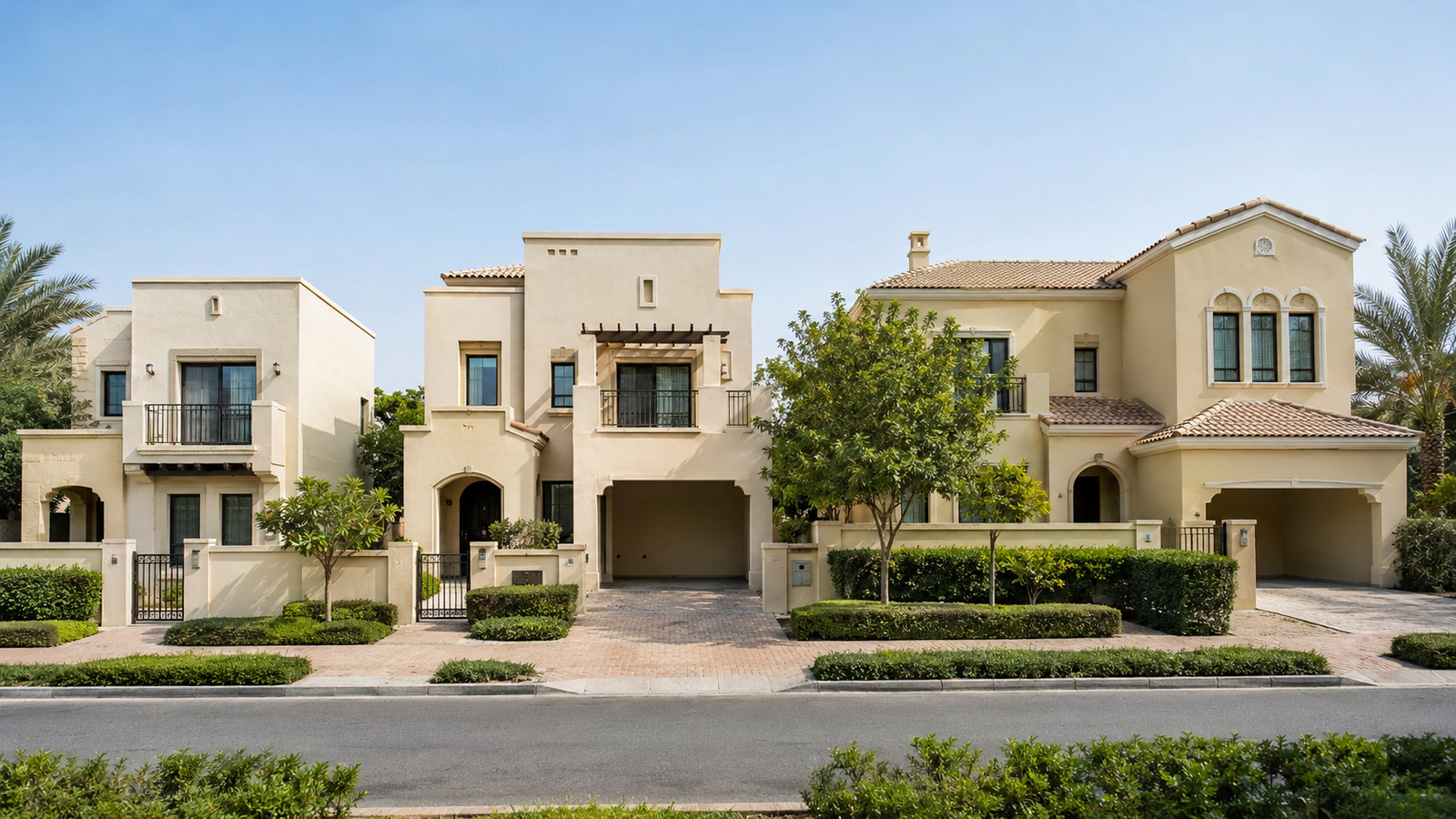
For UK investors targeting the strongest yield profile from a house to let in Dubai, the 3-bedroom townhouse in a mid-market community consistently delivers the best balance of gross yield, tenant demand depth, and management simplicity. A 3-bedroom villa in DAMAC Hills 2 or Mirdif at AED 91,000 to AED 117,000 per year provides significantly more space and lifestyle quality than a comparably priced large apartment in a mid-market area.
Yield by Property Type
Townhouses yield 5% to 7% gross in 2026, while standalone villas yield 4% to 6% gross, with the crucial advantage that net income after zero UAE income tax is often double what UK landlords retain from domestic property after taxes and fees.
|
Property Type |
Gross Yield Range |
Net Yield (after management + service charge) |
Best Entry Community |
|
Townhouse (3-bed) |
5–7% |
4–6% |
JVC, DAMAC Hills 2, Mudon |
|
Semi-detached villa (3-4 bed) |
4.5–6% |
3.5–5% |
Arabian Ranches, Al Furjan |
|
Standalone villa (4-5 bed) |
4–5.5% |
3–4.5% |
Dubai Hills Estate, DAMAC Hills |
|
Premium villa (5-6 bed) |
3.5–5% |
2.5–4% |
Emirates Hills, Palm Jumeirah |
Net yields after management fees of 5 to 8% of gross rent and annual service charges of AED 2.20 to AED 3.10 per square foot run approximately 0.6 to 0.9 percentage points below gross. For UK higher-rate taxpayers, this net Dubai yield still outperforms UK houses to let significantly after domestic tax erosion.
Best Communities for Villa Lets
Choosing the right community for a house to let in Dubai is the most important decision in the entire investment process. Location determines tenant quality, occupancy rate, capital growth, and management complexity.
Dubai Hills Estate
Dubai Hills Estate by Emaar is the benchmark family villa community in Dubai in 2026. It combines an 18-hole championship golf course, Dubai Hills Mall, top-rated schools, parks, and cycling tracks in a fully master-planned environment. Dubai Hills Estate remains the benchmark for the most complete family community package in Dubai, unmatched for schools, retail, parks, and overall infrastructure maturity.
Average annual villa rents range from AED 320,000 to AED 450,000 for 3 to 4-bedroom properties, with premium units commanding higher. For UK investors seeking a house to let in Dubai that attracts corporate family tenants on company-paid leases, Dubai Hills Estate is the strongest single recommendation in the mid-to-premium segment.
Arabian Ranches Communities
Arabian Ranches is Dubai's most iconic villa address, with mature landscaping, a polo club, and golf, and Arabian Ranches 2 offers a stable, mature community at a lower entry price than the original phase, with positive fundamentals on both sales and rental measures. Arabian Ranches 2 records average annual rents of AED 376,906, up 0.1% year on year, confirming rental stability in a community that has fully matured.
The Arabian Ranches brand carries strong recognition among the Dubai expat community, reducing tenant sourcing time and supporting consistent occupancy. For UK investors who want a proven, established villa community with a long track record and strong resale liquidity, the Ranches family of communities represents the most de-risked entry point in the premium villa segment.
DAMAC Hills 2 and Value Communities
DAMAC Hills 2 is the most affordable community in Dubai villa investment at AED 894 per square foot in 2026, with average annual rents of approximately AED 107,829 and 5.1% rent growth year on year.
For UK investors entering the house to let in the Dubai market with a tighter budget, DAMAC Hills 2 delivers the strongest gross yield percentage of any established villa community, with entry prices well below AED 2 million for quality 3-bedroom townhouses. Villanova, Mudon, and Al Furjan round out the value tier, offering 3-bedroom townhouses from AED 160,000 to AED 212,000 per year in annual rent at purchase prices that generate 5 to 7% gross yields.
Value-tier communities suit income-focused UK investors who prioritise yield percentage over prestige address, and they increasingly attract families priced out of premium communities by rising asking rents.
Managing Your Dubai House from the UK
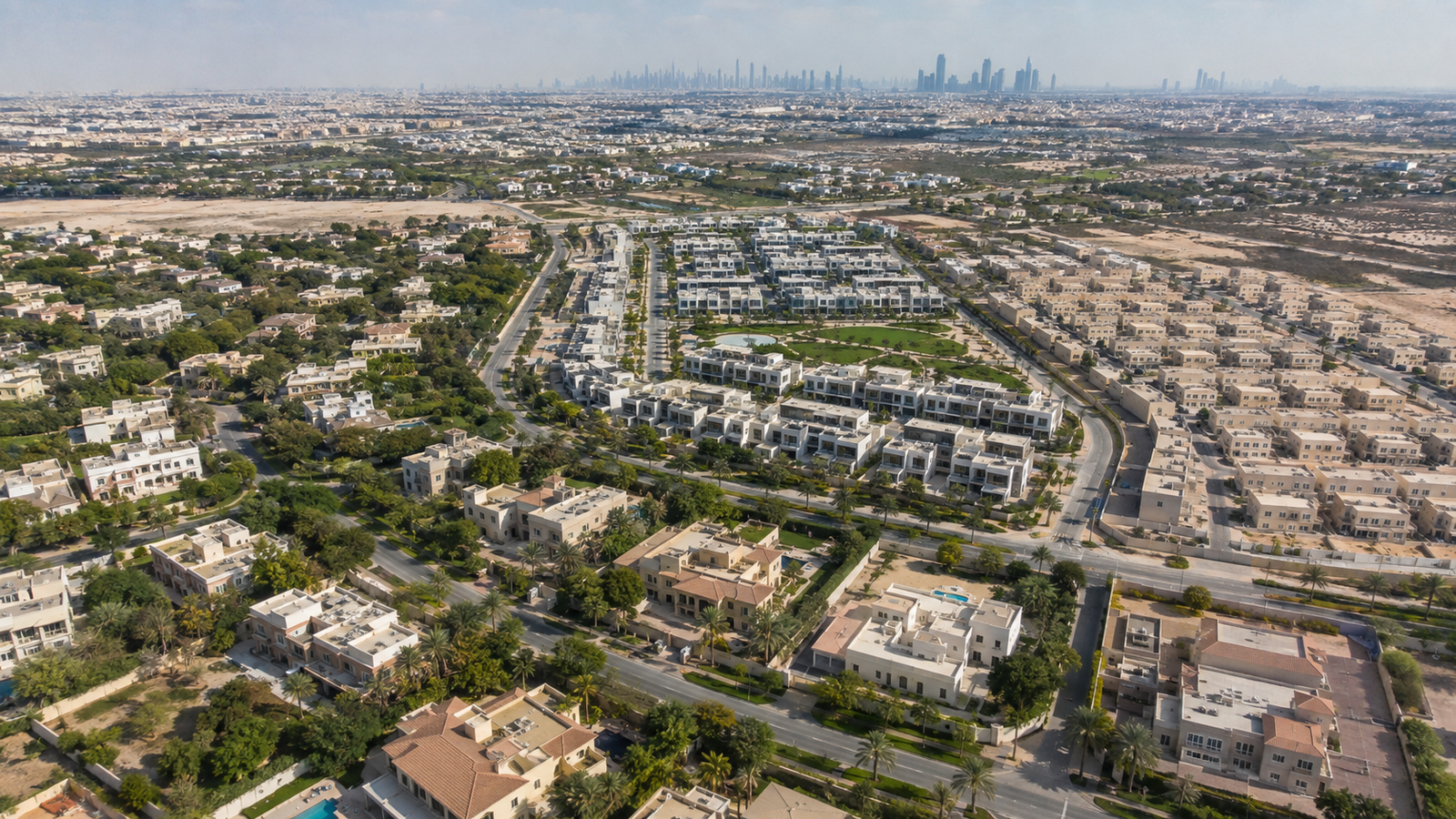
The most practical concern for UK investors considering a house to let in Dubai is remote management. Dubai's property management industry is well-developed, highly professionalised, and fully capable of running your house without any physical presence from you.
Property Management Setup
A licensed Dubai property management company handles the full letting cycle for villa and townhouse landlords:
-
Tenant sourcing, referencing, and vetting
-
Tenancy agreement preparation and MOU signing via Power of Attorney
-
Ejari registration with the Dubai Land Department
-
DEWA (Dubai Electricity and Water Authority) utility setup
-
Rent collection via post-dated cheques
-
Maintenance coordination and contractor management
-
RERA compliance and annual tenancy renewal
-
Regular property inspection reports sent to the UK-based landlord
Management fees for villa and townhouse long-term lets typically run 5 to 8% of annual rental income, lower than the 8 to 10% standard for apartments due to the higher annual rent values involved. These fees are fully deductible against your UK Self Assessment income declaration.
Ejari and Legal Requirements
All tenancy agreements for a house to let in Dubai must be registered through the Ejari system administered by the Dubai Land Department before the tenant can access DEWA utilities. Ejari registration creates an official tenancy record and is a prerequisite for any future rent dispute resolution at the Rental Disputes Centre.
Your property management company handles Ejari registration as a standard part of the letting setup process. UK investors should ensure their management agreement explicitly confirms the manager's responsibility for Ejari registration at the start of every tenancy, including annual renewals.
Rent Payment Structure
Rent in Dubai is paid upfront at the start of each tenancy as one, two, or four post-dated cheques covering the full annual amount. For villa landlords, this structure is particularly advantageous:
-
Single cheque: Full annual rent received upfront, zero income uncertainty
-
Two cheques: Two six-monthly payments, strong predictability
-
Four cheques: Quarterly payments, still significantly ahead of monthly rolling UK model
-
Net transfers: Management company transfers net income to UK bank account monthly or quarterly
-
Currency note: AED is pegged to USD; GBP receipts fluctuate with GBP/USD exchange rate
The upfront payment model makes a house in Dubai one of the most income-predictable landlord positions available to UK investors anywhere in the world.
UK Tax on Dubai House Income
HMRC Self Assessment
UK tax residents must declare all rental income from a house to let in Dubai on their Self Assessment tax return each year in the foreign income section. The UAE charges zero income tax. The UK-UAE Double Taxation Agreement ensures you are not taxed twice on the same income.
Allowable deductions against gross villa rental income include property management fees, maintenance and repairs, buildings insurance, service charges, and mortgage interest at the 20% tax credit rate for individual landlords. The net taxable income after deductions is then subject to UK income tax at your marginal rate.
Capital Gains and IHT
When you sell a Dubai house, the UAE charges zero capital gains tax. HMRC treats the gain as a foreign capital gain subject to UK CGT at 18% for basic-rate taxpayers and 24% for higher-rate taxpayers, with the annual GBP 3,000 exemption applying. Married couples holding the property jointly can double the exemption and potentially use a lower tax band.
Under HMRC's inheritance tax rules updated in April 2025, UK residents for 10 of the last 20 tax years face IHT at 40% on worldwide assets above the GBP 325,000 nil-rate band, including Dubai property. Structuring advice from a UK tax professional before purchase protects your estate position from the outset.
Ready to Let a House in Dubai?
A house to let in Dubai in 2026 combines zero UAE income tax, villa capital appreciation projected at close to 18%, a landlord-friendly legal framework, upfront rent payment, and a mature remote management model that makes it genuinely passive from the UK.
Whether you target a mid-market JVC townhouse at 6% gross yield or a premium Arabian Ranches villa attracting corporate family tenants, the fundamentals support a stronger net return than comparable UK houses to let for higher-rate taxpayers.
Register for the Dubai Property Expo UK at dubaipropertiesexpo.co.uk to meet 100+ RERA-verified developers, compare live villa and townhouse projects, and get expert guidance on finding the right house to live in Dubai for your goals in 2026.

Frequently Asked Questions
How much does a house to let in Dubai earn annually?
Annual villa rental income in Dubai in 2026 varies significantly by community and property size. Mid-market 3-bedroom townhouses in communities like DAMAC Hills 2 and JVC earn AED 107,829 to AED 192,106 per year. Established premium communities such as Arabian Ranches average AED 338,141 to AED 359,779 annually, according to Dubai Land Department transaction data. Dubai Hills Estate 3 to 4-bedroom villas command AED 320,000 to AED 450,000 annually. Palm Jumeirah villas start from AED 600,000 per year at the premium end. For UK investors, GBP equivalent returns depend on the prevailing GBP to AED exchange rate at the time of income transfer.
What rental yield can I expect from a house to let in Dubai?
Gross rental yields for Dubai villas and townhouses in 2026 range from 4% to 7% depending on community and property type. Townhouses in mid-market communities like JVC and DAMAC Hills 2 deliver the strongest gross yields at 5 to 7%. Standalone villas in established communities such as Arabian Ranches and Dubai Hills Estate yield 4 to 5.5% gross. Net yields after management fees of 5 to 8% and service charges typically run 0.6 to 0.9 percentage points below gross. Despite lower gross yields than Dubai apartments, villa net returns after zero UAE income tax outperform comparable UK houses to let for higher-rate taxpayers in 2026.
Can I let my Dubai house remotely from the UK?
Yes. UK investors let Dubai villas and townhouses entirely remotely through licensed property management companies every day. The management company handles tenant sourcing, Ejari registration, rent collection via post-dated cheques, DEWA utility setup, maintenance coordination, and regular inspection reporting. Management fees for villa long-term lets run 5 to 8% of annual rental income, lower than apartment management fees due to higher rent values. Net income is transferred to your UK bank account monthly or quarterly. Dubai's upfront rent payment structure means income certainty is considerably higher than in the UK monthly rolling model.
What are the best communities for a house to let in Dubai in 2026?
The strongest communities for a house to let in Dubai in 2026 depend on your investment priority. For maximum gross yield, DAMAC Hills 2 and JVC deliver 5 to 7% with lower entry prices. For tenant quality and corporate lets, Dubai Hills Estate and Arabian Ranches attract premium family tenants on company-paid leases. For capital appreciation alongside rental income, Dubai Hills Estate and Arabian Ranches 3 show both sales and rental growth moving in the right direction. For the strongest combination of yield, capital growth, and resale liquidity, Arabian Ranches, The Springs, and Dubai Hills Estate are consistently the top three recommendations for UK investors.
Do I pay UK tax on rental income from a Dubai house?
Yes. As a UK tax resident, you must declare all rental income from a house to let in Dubai on your Self Assessment tax return each year. The UAE charges zero income tax on rental earnings. The UK-UAE Double Taxation Agreement prevents double taxation. You declare gross rental income, deduct allowable expenses including management fees, maintenance, insurance, and mortgage interest, then pay UK income tax at your marginal rate on the net amount. Capital gains on the eventual sale may also attract UK CGT at 18 to 24%. Always take professional UK tax advice before purchasing, as ownership structure and disposal timing both affect your final liability.